Showing posts with label writing. Show all posts
Showing posts with label writing. Show all posts
Sunday, February 1, 2015

Monday, November 10, 2014
Dream Writing Location?
I'm proud to be one of ten authors participating in a series called "Authors Answer" over at I Read Encyclopedias for Fun. Each week, we respond to questions about the writing process and writers. This week we're discussing our dream writing studio or office. Come by and join in the conversation! What would your dream writing location look like?
Sunday, October 19, 2014
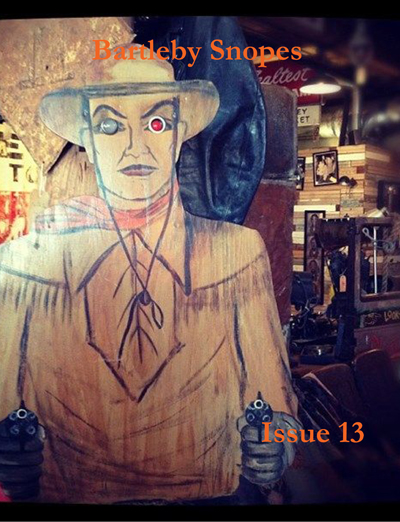
Bartleby Snopes Contest Win Announcement
I'm thrilled and humbled
to announce that the editors and judges of the Bartleby Snopes 6th Annual Dialogue Only Contest chose my short story "Everyone Smiles" as their
second place winner. The story will be available online and in the semi-annual
print magazine in January 2015.
"Everyone
Smiles" was a first for me--a short story entirely in dialogue without
even speech tags.
The seed for the story
was planted two years ago when I made a return visit to Lake Lure, North
Carolina, infamous as a filming location for the 1987 film Dirty Dancing. I had originally been to the area when I was a young
teen, and I have a photo of my sister and me standing on the green-carpeted
outdoor steps to the hotel. As I sat in the car on that second visit in the
pouring rain, I squinted through the foggy windshield, trying to recapture the
excitement I'd felt on the previous visit years before, but it just didn't look
the same. Oddly, I couldn’t get over the fact that the hotel had removed
the green carpeting. It was in that moment of incongruity between what I
remembered (or perhaps what I had created in my memory from that photo) and
what I was seeing, that the story “Everyone Smiles” came to life. It would take
another two years, though, for me to make that kernel of an idea into something
resembling a story, and it took the Bartleby Snopes challenge for me to put it
all together.
Imagine This! Publication
I’m excited to announce that my short story “At a Loss” was
recently published in the Imagine This!An Artprize Anthology. From the contest’s website:
Imagine This! An ArtPrize Anthology is a collection of poems, short stories, and personal essays, along with reproductions of works displayed during ArtPrize, an international art competition held in Grand Rapids, Michigan.
This story originated from an experience one of my former
students had, which led to a lifetime friendship. She met a man while riding
the public bus who turned out to be deaf. She was determined to communicate
with him, although she knew no sign language and he could not speak. My story
went in a very different direction, but I am indebted for having been told the
initial events.
Monday, October 6, 2014
Sensitive Periods
Wow, it's been a while since I collected my thoughts long enough to write a blog post. I've been busy, busy... Okay, maybe not busy enough, but I'm trying to look busy while binge-watching last season's episodes of The Walking Dead before the new season starts this week.
Anyway, in addition to working on Novel #3, I've churned out several new short stories over the past few months. It seems like they're suddenly coming more readily lately for some reason. Do you ever find that you hit a productive bubble of time? Maria Montessori wrote about kids having sensitive periods in which they learn skills more quickly. I think I'm in one of those sensitive periods as far as my writing is concerned. I'm liking this feeling. I just hope my quantity is also reflecting some quality... which leads me to the next task on my agenda: Editing, polishing, and sending these little beauties out into the world.
Why is that part of the process so much less fun than the writing?!
Anyway, in addition to working on Novel #3, I've churned out several new short stories over the past few months. It seems like they're suddenly coming more readily lately for some reason. Do you ever find that you hit a productive bubble of time? Maria Montessori wrote about kids having sensitive periods in which they learn skills more quickly. I think I'm in one of those sensitive periods as far as my writing is concerned. I'm liking this feeling. I just hope my quantity is also reflecting some quality... which leads me to the next task on my agenda: Editing, polishing, and sending these little beauties out into the world.
Why is that part of the process so much less fun than the writing?!
Sunday, February 2, 2014
No Know-It-All: 5 Tips for Integrating Research Into Fiction
So I took some time this evening to catch
up with a little blog reading, including an email newsletter I get monthly from
K.M. Weiland (2014) of Helping Writers Become Authors.
There were a few lines in an article titled “Research is Great! Now Keep It
to Yourself” that leapt off the page at me tonight, including this
first gem:
Fortunately for us, research is usually fun, especially since
we’re often going to be reading about subjects that already interest us
personally.
Wow, did that strike a chord with me! I’ve
been researching for my next book, a story that takes place along the same
historical arc as the sinking of the ship S.S. EdmundFitzgerald in Michigan.
I’ve become an Edmund Fitzgerald shipwreck fact junkie! For
those of you who aren’t from Michigan or who didn’t grow up in the folk music
scene of the 70s, the sinking of the Fitz may be an unknown
event. However, the disappearance of this giant ore carrier in the frigid
waters of Lake Superior on November 10, 1975, and its immortalization in Gordon Lightfoot’sballad have made
this tragedy stick in the hearts and minds of many.
That being said, such a tragedy has been
discussed, researched, argued over, and written about countless times. While my
book has little to do with the story of the Fitz (my story
sort of happens in the shadow of the historical event), I wanted to be sure I
knew the story well and did my research accordingly—a LOT of research! I can’t
help but worry, though, that there will be those who know a great deal more
than I do who will find fault with my efforts. Thankfully, I’m not alone in
this worry, as Weiland (2014) notes:
No matter what subject we’re writing about, we have to assume
we’ll find some pretty smart readers out there who will know more about it than
we do.
This is a fact of reality: There will
always be someone out there who knows more about the topic than I do. Although
I can’t solve that problem, I can make some effort to ensure that I’ve done my
due diligence on the research and writing end. To that end, here are goals for
researching and integrating that work into my own WIP:
1.
Read
a LOT: To research a
topic effectively, a writer should read whatever is available on the topic. And
I’m not talking about sitting down and typing the topic into Wikipedia, although that could be a good
first step. The bibliographic materials on Wikipedia articles can often be very
useful “next steps.” The point, though, is to read widely on the topic, to be
sure to see it from as many angles as possible—otherwise readers will gladly
point out missed perspectives.
2.
Seek
out Experts: While I realize
that few of us have the budgets to allow for research trips, I’ve found that
email is a great way to connect to the experts who have already spent countless
hours researching the same topic. The best part is that many of them are happy
to answer a few questions on their favorite subject—as long as their time is
valued and respected. There’s no substitute for going to the source when it
comes to authenticating research.
3.
Take
notes: This sounds a bit
obvious, but most of us aren’t very good at remembering things. How many
times have you had that moment when you know you heard something somewhere—but
just can’t remember where or when? While it may not be necessary to write down each
detail from many sources—especially where the ideas from those sources
overlap—it can be incredibly helpful to note where the sources differ. What are
the causes for those differences?
4.
Give
credit ethically: Okay, so I should
out myself here and admit that I teach English, so I’m constantly lecturing my
students about citing their sources. To not do that myself would just be
hypocritical—and maybe downright criminal since I know better. However, it’s
hard to give credit in the usual sense in fiction. There are opportunities in
an acknowledgments section and in a works consulted section to give credit to
the original researchers whose work has informed my way of thinking about the
topic. That can also give the writer a bit of protection if a fact is challenged.
Readers have some idea where the idea originated—if it wasn’t something that
came from the author’s imagination. (By the way, since I’m talking about
citation in this post, I felt it absolutely necessary to roll out the formal
APA citation for this blog entry—don’t be alarmed!)
5.
Contribute
to the Ongoing Conversation:
Imagine walking into an ongoing conversation and just repeating what everyone
else is saying. How well would that go over? The participants in the
conversation would likely just ignore what we say entirely. Likewise, when
writing about a topic that is already being discussed, we need to take in
what’s being discussed, synthesize it with what we know, and add something
valuable to the conversation—some new knowledge or insight. Fiction allows writers
the opportunity to “see” a topic in an entirely new light. It’s important not
to simply regurgitate the facts from our research; instead, we should aim to
build on those ideas to create a fresh take on the topic.
I know I will never know everything there
is to know about the S.S. Edmund Fitzgerald no matter how much
research I do. But that isn’t my goal. My goal is to use the research as a
scaffold on which to build my own story. What research tips have you found most
helpful in building your own story scaffold?
References
Weiland, K.M. (2014, February 1). Research
is great! Now keep it to yourself. Helping Writers Become Authors.
Retrieved from
http://penforasword.createsend1.com/t/ViewEmail/j/FCA55A97ECE39E8C/A4C28CA257A89AFBC9C291422E3DE149
Saturday, January 25, 2014
It's Looking Smisty Out Today: A Few Words on Word Choice
I love writing about my home state of Michigan. Although I’m
new at writing fiction, I’ve been very consciously trying to place my writing
in the places I know best. As far as I’m concerned, it’s some of the most
amazing scenery this country has to offer, and I’m proud to call myself a
Michigan writer.
True though that may be, I find one of my biggest challenges
as a Michigan writer to be word choice. Now, don’t misunderstand me; I’m great
at using a thesaurus judiciously and have a vast vocabulary (just ask my dad
who spent years trying to make me talk a little less). My problem lies in
trying to come up with original ways to describe the things I love best about
my state—namely the weather these days.
The old joke used to be that Eskimos had a thousand (or
whatever number your version of the saying included) words for snow. Well, I
wish I had that kind of vocabulary when trying to describe the different ways
the snow has appeared outside my office window just this winter alone. Right now,
for example, there’s a fine but persistent snow coming down, making the sky
appear more gray than clear. Wouldn’t it be nice if there were a word for that
kind of snow—something like “smist”? I’d
also take a great new word for the kind of snow that comes down in big feathery
flakes, twisting and twirling on the wind—maybe “sheathery” would work for
that. Then I could just write, “What had begun as a sheathery afternoon soon
turned smisty” and dig on into the plot of my story. Instead, I have to puzzle
over words, searching for the perfect accretion of adjectives to convey just
the right atmosphere. Words can be so confining!
Or can they be? As any who have suffered through a high
school English class might remember, Shakespeare had a knack for inventing new
words. Scholars pore over his works, marveling at the ways he changed
grammatical structures, added prefixes or suffixes where they hadn’t been before,
and even created words no one had ever used before. Did you know, for example,
that Shakespeare created the word “friended”
long before Facebook made it popular? And I think Shakespeare may have met my
husband a time or two before he crafted the word “forgetive.”
Similarly, who can question the preeminent word creator Dr.Seuss’s use of words like “zizzer-zazzer-zuzz”
and “fiffer-feffer-feff”? Where would the world be if we didn’t have the lorax
and the grinch? Seuss certainly never let words constrain him.
Perhaps the lesson here is that if the sky is looking
smisty, then that’s what I need to write. I’m not Shakespeare or Seuss (or
Geisel either), but I know my setting better than anyone else. If I own the
word, maybe someday my readers will be looking up at the sky remarking on the
lovely sheathery snow.
What are your favorite new words from things you’ve read or
written? What is your greatest challenge when it comes to word choice?
How SHORT is Short? Navigating the Literary Journal Marketplace
It is a blustery Saturday here in Michigan, and I’m supposed
to be preparing some short stories for submission to literary magazines.
Getting a piece published in a mag is one of my writing goals for the year,
along with starting Novel #3, which hasn’t gotten off to a speedy start. At the
moment, both of those goals seem fairly insurmountable, but even Everest looked
that way once upon a time.
Since I’m a newbie at
this fiction writing thing, I’m learning all about literary magazines as I go. My
husband has much more experience with this topic than I do, so he’s been
schooling me on the important elements. First, literary magazines can be
divided into tiers. Of course, upon hearing this, I immediately tried to Google
what mags fell into which tier. No such luck. My dear husband then enlightened
me that the tiers were more theoretical—the bottom of the list (mags with
dubious credibility in the publishing world), the middle-of-the road
publications, and the cream-of-the-crop reviews. Back to researching. It didn’t take me long to discover that any
magazine willing to pay for submission was probably out of my league. I’ll save The
New Yorker for the “in my dreams” submission list!
The most pressing issue I’ve been trying to figure out is what
exactly “short” fiction is. That is, I understand the “fiction” part just fine.
It’s the “short” part that has me puzzled. My research has made it pretty clear
that no one else knows how short short fiction is either. Some magazines put a
cap on the number of words—say 3,000—while others focus on page length. One
magazine’s submission page mentioned short short fiction, which sent me on
another hunt for a definition. Is what I write too short? Not short enough? Am
I writing short fiction or short short fiction or is it flash fiction—is there
a difference? Writer’s Digest, one
of my favorite writing resources these days, holds a “short short story”
competition where the rules stipulate no more than 1500 words. That’s pretty short,
I suppose, but then I found an NPR contest where
the story must be able to be read aloud within three minutes. So now I have to
time myself, too? This is getting complicated!
I’m not sure I think much about the length of what I’m
writing when I’m writing it. My focus is on the characters and the story—not on
word count or page length. I’m finding that I’m not liking this “administrative”
part of writing—the work that goes into trying to get published. Perhaps that’s
why I’m writing this post instead of deciding which magazine publishes my kind
of short story.
Is it possible to love to write—and hate to publish? Is
there a way to make the quest for publication feel less like work?
Thursday, May 30, 2013
Postpartum: How to Go On After Completing a Novel
So it’s been a while since I’ve posted anything here—but I’ve
got good reason. I’ve been in the trenches finishing the first draft of Novel
#2. I’m happy to announce the official birth of a 93,333 word manuscript on May
22. It may be sacrilegious to write this, but writing a novel really is quite a
bit like the birth of a child for me (and I can say that since I’ve done both
twice now).
Now, before you think I’m crazy, let me share the similarities.
This second book has taken me somewhere near the nine-month timeframe to draft.
During that time, I’ve faced plenty of discomfort, nervousness, paranoia, and
complete lack of control—all words that I would have used to describe both my
pregnancies. And just when I started to wrap my brain around this new little
being inside of me, it was time for said being to pop into the world.
As excited as I’ve been to finish my second book, I’ve been
going through an odd sort of separation anxiety this past week. First, it was
my playlist that I had to say goodbye to. I’ve had the same Pandora channel
playing while I wrote for nearly the duration of that recent project, but when
I turned it on this week, it didn’t feel right anymore. The music seemed
jarring, and I found myself distracted by it rather than inspired.
The loss of the music wasn’t as monumental as the loss of my
characters. Over this past week, I’ve had to come to the realization that I won’t
be spending the same amount of time with them ever again. It’s bizarre to admit
it, but those characters are like good friends by now. I’ve spent nine months
in their heads (or is it that they’ve spent nine months in mine?), and even
though I have a great deal of editing left to go, our relationship is on the
downslope. I know fully that soon I’ll be engrossed in a new project—and these
characters will go back to just being what they are—figments of my imagination.
We recently celebrated the birthdays of my two kids,
complete with cake, balloons, presents, and all the fanfare such events
require. Yet, there is a piece of me that mourns another year of childhood
behind them. Just as I have to trust my
children to go out into the world—to be who they are—I have faith that this new
novel will do the same. Make Mama proud, Baby!
Okay, now tell me, do you experience separation anxiety
after you’ve completed a major project? How do you let go?
Monday, April 8, 2013
NaNoWriMo: Off to Camp
It’s spring, and while the weather isn’t very wonderful (I
can still see snow from where I sit), I have a bad case of spring fever. I’m
not much of a fan of yard work, but about now I’d happily grab a rake and do
some damage to our lawn. Every time I see a flower commercial on television, I
get a bit giddy at the thought of planting something, even knowing full well
that Lake Michigan guarantees us many more below-freezing nights before it’s
safe to plant.
As if the general lure of spring isn’t enough of a
distraction, we’re in the process of readying our house to sell. Between the
constant cleaning, hunting for realtors, and considering all the what-ifs, a
million little bees are buzzing around in my head constantly.
With all that in mind, I decided I needed a little
motivation to finish my current work-in-progress. I’ve been working away at
this book for six or seven months and am very excited to see where it goes—but I’ve
just been so distracted from working. So, I’ve signed up for Camp NaNoWriMo, a
thirty-day writing extravaganza.
For those who aren’t familiar, NaNoWriMo refers to the
National Novel Writing Month: November. NaNoWriMo is actually the brainchild of
an organization called The Office of Lights and Letters. The goal is quite
simple: Write a novel during the month of November—or at least 50,000 words of
it. They provide the goal and a place to commiserate with and/or gloat to
fellow writers online; the writers provide the words—screenfulls of them.
I’ve been intrigued by the idea of such an endeavor, but I’ve
flaked the past two years. The word count just seemed too daunting. How could I
possibly write 50,000 words in a month with work, a family, and a million other
excuses?
Now, if you’re keeping track, it’s not November—not even
close. The fact is, NaNoWriMo has grown quite a following over the years. There
are so many crazy writers out there who are gluttons for punishment that the
people over at The Office of Lights and Letters expanded the idea to include
two camps each year, one in April and one later in the summer. The best part of
Camp NaNoWriMo (besides skipping the mosquitoes and wet weather usually
associated with the word “camp”) is that the word count is flexible. Those of
us with lots of excuses now have one fewer reason to skip out of the fun.
And so, here I sit, contemplating how many more words I need
to write before the end of the month. Yes, I know my goal should be to
concentrate on just writing my best to finish my current novel, but I feel
oddly pressured by that magic number, even though I took it easy on myself with
just a 20,000 word goal. I’m proud to say I’ve written over 7,000 words already
this month, so I’m on track to succeed, but I’m really hoping when I reread
what I’ve written at the end of the month, I won’t find that it’s quantity rather
than quality.
Oh well… I needed motivation and now I’ve got it. Fewer than
13,000 words left to go… or the end of my book, whichever comes first!

Wednesday, February 20, 2013
Hearing a Novel: Creating a Novel Playlist
The book Sing You Home
by Jodi Picoult has a line that simply reads, “Every life has a soundtrack.” In
recent days, I’ve become a convert to the idea that every book has one, too.
I understand that this is by no means a new or original
idea. I remember giving it some thought a while back when I wandered through
Stephanie Meyer’s website. She actually posted a playlist for each novel, sort
of a snapshot of the music she listened to while writing. At the time, I remember thinking that it was quite odd for her to post such
a thing. Who would want to know what she listened to while she wrote? What
difference did the music make since it wasn’t as if it was a movie (yes, I
realize it would eventually become a movie, but this was way before that
point). A novel is a visual experience rather than an auditory one, isn’t it?
I suppose I’ve betrayed myself as a reader in that last
line. I am a visual person, so when I read, I don’t generally “hear” the book. I
guess I’m a visual writer as well, focused on the words rather than the music
that informs them. Maybe that’s why this soundtrack idea was really challenging
for me to wrap my brain around. However, this playlist thing seems to be taking
over the literary world. Erin Morgenstern and Jennifer Egan,
both best-selling authors whose work I've enjoyed, even have playlists on Spotify to give context to their
books.
In wandering some of my favorite writing blogs, I found out
that the idea of a playlist, or soundtrack, for a novel has become fairly
commonplace, but I was still a bit curious about why someone would go through
the trouble to do this. After all, isn’t writing a novel about WORDS rather
than music?!
After a good deal of research, I think I’m starting to get
it. Young Adult writer Christina Farley says she creates a playlist to
establish the mood of a piece and to maintain a consistent tone.
I wasn’t conscious of this, but I have sort of accidentally done this in my
first two novels. I am a devout Pandora listener, and I was rather perplexed
when what I normally listened to—the songs that were the backdrop for Novel
#1—were far from what I wanted to listen to as I wrote Novel #2. I’m not much
of a country music fan, but somehow, I’m drawn to certain country artists as I
write this time. I couldn’t have explained why if someone asked me… but I’m
starting to understand now!
So, okay, maybe I have some background music in my head for
my books, but a playlist? Really? Do I need to go that far? Rob Reid writes in Wired Magazine
that he found each of his characters had a different playlist, which helped to
define them—and some of this characters even have very different musical tastes
than he does. Ink Out Loud has this incredible discussion of how to think about
the playlist for a novel,
including themes for specific scenes, characters, and even the places depicted
in the book. When I really got thinking about it, one of my favorite novels
from 2012, written by a former Miami University colleague of mine Jason Skipper, Hustle,
was saturated with music references. I’m not sure if Jason has posted a
playlist for the book somewhere, but I’m sure he easily could. I’ve even heard
he’s been persuaded to sing during his readings to bring that playlist into the
foreground.
Whoa... my mind is
reeling. Each character could have a song? Or maybe each scene? My book could
be like a movie? This sounds a bit overwhelming—yet I’m really intrigued.
Suddenly I’m looking back at my first novel and hearing a solo piano playing behind Preston’s
words, something feisty—and a bit sultry—blaring out of Tess’s radio as she
drives to her photo shoot, and the strains of something a bit melancholy tinged
with a bit of anger as Grace reads the letter from Jon’s lawyer. Suddenly, I’m
HEARING my novel… and it sounds amazing!
The best resources I've found so far for creating a playlist for a novel include Pandora, Playlist, and Spotify. Do you include a playlist on your website or blog for your books? What has worked best for creating and sharing that playlist?
The best resources I've found so far for creating a playlist for a novel include Pandora, Playlist, and Spotify. Do you include a playlist on your website or blog for your books? What has worked best for creating and sharing that playlist?
Monday, February 4, 2013
It’s Research, Mom, Really! Tips for Writing Sex Scenes
I’ve set before myself an interesting task for this week—an interesting
and awkward and blush-inducing task. It’s actually something that I’m sure most
writers have to consider at some point in their careers—of course there are
some obvious exceptions, but I’ll let you explore those on your own.
This week I’m researching how to write sex scenes.
Yes, you read that correctly. I muddled through a few sex
scenes in my first novel, but the writing was achingly slow because I agonized
over every word. No, I didn’t break out the thesaurus to find that perfect word
for each body part, but it felt impossibly difficult to figure out how to
describe what characters are feeling and doing in that very intimate moment. That’s
the moment when I just want to say “…And the door closed” or “…And they woke up
beside each other the next day.” As a reader, though, I know what a cop-out
that is (I’d still like to slap Stephanie Meyer!), so I’m doing my homework. Dear
readers: I solemnly swear that I won’t skip the good stuff.
To aid me in my quest to become better at writing sex
scenes, I turned to the experts: the writers of Harlequin Romance novels! I
went to my local used book store and picked up a selection of novels to get a
feel for (oh gag) (double gag) (ugh!) the fine art of writing about sex. So
far, I haven’t been disappointed. Truthfully, though, I’m not sure that I could
reproduce much of what they include in their scenes without laughing
hysterically. (Just ask my husband who had to listen to me read the
over-the-top descriptions aloud because I couldn’t keep the hilarity to
myself.)
Okay, so if Harlequin won’t give me all the answers, where do I go? I decided to peruse the internet. These writers are the founts of knowledge, right? Honestly, there were really only about two things all these sources agreed upon in their discussions (although I certainly hope I already knew these beforehand):
1.
Use all five
senses if possible. Sex includes more than just what we see or feel they
tell me.
2.
Don’t use words
like “penis” and “vagina.” (Sorry, I
guess now I’m making you blush, too!) As one writer said so well, writing a sex
scene shouldn’t be like a trip to the gynecologist!
So, while I’m not sure I’ve accomplished all I set out to discover about this topic, I did pick up some useful tidbits in my research:
1.
Sex isn’t about the sex; it’s about advancing the story
& understanding the characters.
2.
Sex is as much about what comes before and after as
during.
3.
The best sex scenes don’t include clichés or
euphemisms.
4.
Reading the sex scene aloud should result in heat—not laughter.
5.
#4 above notwithstanding, sex is humorous. If
everything goes perfectly in a sex scene, it’s probably not very realistic!
Now, armed with my new-found knowledge, it’s time to get back to Book 2. I’ve got some hot sex to write—sorry, Mom!
Tuesday, January 29, 2013
"...Make them Wait": Writing in Serial Form

This week I’ve started posting chapters of my first novel on
this blog [no longer available here]. The idea was simply that the blog was an easy way to share this work
with others without making a bunch of hard copies. I’ve decided that I’ll do
another revising pass on each chapter before I post it, knowing full well that
the work is far from finished and needs all the help I can give it before I
show it to anyone. That having been said, I’m also working on Novel #2, which
I’m really enjoying writing, so I’m a bit slow on revising and then posting new
chapters of Novel #1.
That reality became very clear when I received a message
from my dear friend Heather saying simply “Chapter 2… Please!”
Somehow that note got me thinking about my process, which
oddly led me to think about my favorite author, Charles Dickens, and how he
published almost all of his works serially. For those non-Dickens fans out
there, most of his works were published in 20 monthly installments of around 32
pages each. This was a fairly common practice in the day, so much so that
publishers would often tout the phrase “Make them laugh, make them cry, make
them wait!” The benefit to the publication (and the authors themselves) was
that it was much more affordable for people to buy the novel on the installment
plan rather than pay a larger sum of money up front for a complete novel.
Simple economics, right?
Not quite. While I’m sure Dickens was appreciative of the
way serial publishing gave him more readers. I tend to think there’s more to
the story of why he continued to publish that way. See, an interesting fact
about Dickens that sets him apart from many of his contemporaries was that he
not only published serially, but he wrote
serially as well.
Think about that for a moment. The way I see it, Dickens
would write the first 32 pages—maybe even the first 64 pages—and then he’d wait
for the reaction of the audience before writing the next installment. If, for
example, the audience hated the main character, Dickens could change things up
so that an originally more secondary character would take the lead in the next
installment. If a character died and the audience took it poorly, SURPRISE! The
character wasn’t really dead at all—it just
seemed that way! The audience was intimately factored into every one of
Dickens’ novels.
I cannot imagine writing that way, being continually
beholden to the variability of readers’ opinions. I’d be afraid the final
product wouldn’t be mine at all but would be a complicated collaboration with
my ideas bending and bowing to others’ input. In practical terms, whose name
would go on the cover?
It’s an interesting idea, though, isn’t it? In some ways, I
think everything I write is a complicated compilation of everyone I know and
everything I’ve heard and experienced. Although I’m not as brave as Dickens, I
appreciate the overt way he used the audience to shape his books.
One of my favorite pieces of Dickens’ work is a seldom-read
unfinished novel called The Mystery of
Edwin Drood. Remember that installment plan? The problem with that modus operandi was that Dickens died
with only 6 of 12 planned installments of his final novel complete. To this
day, although many have ventured guesses, no one really knows who killed Edwin
Drood. Given what I know of Dickens, though, maybe he didn’t even yet know
himself.
Sunday, January 27, 2013
To Avoid Avoiding : Robert Benchley & Procrastination
The secret of my incredible energy and efficiency in getting work done is a simple one. I have based it very deliberately on a well-known psychological principle and have refined it so that it is now almost too refined. I shall have to begin coarsening it up again pretty soon.
The psychological principle is this: anyone can do any amount of work, provided it isn't the work he is supposed to be doing at that moment.
("How to Get Things Done," in Chips off the Old Benchley,1949)
I came across the gem above from actor, critic, and comedic writer Robert Benchley today as I thought about why it is that I procrastinate so much when it comes to writing my novel. This has been a continual problem for me, and it’s one that I have never been able to understand.
The real quandary is that I like to write—I may even love to write. I’m not like many of my writing students who whine that they hate writing and therefore can’t determine where to begin. They spend countless hours avoiding the task out of a mix of fear and disdain. On the contrary, for me, there’s nothing like sitting down at my computer and letting a fictional character take me somewhere I didn’t expect to go. Once I start writing, every bit of concern and anxiety I may have had about the bills that need paying or the meeting I need to prepare for disappears as my only focus is recording what is in that character’s mind.
So why do I do everything I can to avoid sitting down at the computer and letting the magic happen?
I don’t have that problem when it comes to my other great love, reading. I’ll curl up with a good book at any opportunity—in a doctor’s office, in the car waiting for a meeting to begin, in the bathtub, anywhere—even if it’s only for a few short minutes. Like writing, reading takes me away from the world I live in with floors to be vacuumed, diapers to be changed, and email messages to respond to. I relish that escape.
Reading Benchley’s thoughts today got me thinking again about my procrastination habit. I have focused my energies thus far in pondering the “why” of my habit. I feed the procrastination monster a bit more as I wonder why it is I just don’t sit down and write. Benchley would probably tell me it’s time to strategize my way around the impasse. I can think of only one surefire way to avoid avoiding writing.
I’m going to go grade student essays.
Subscribe to:
Posts (Atom)